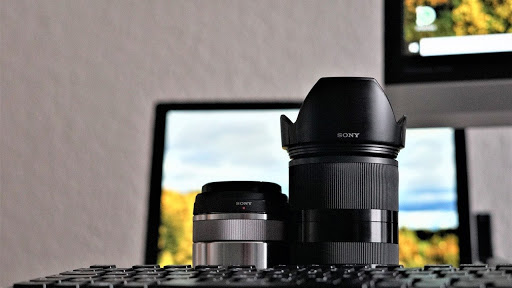
In photography, there are many techniques you can learn to produce a wide variety of interesting photos and images. One of them is zoom photography, also known as zoom blur or zoom burst. To be able to produce pictures with this technique, there are a few tips that you can follow below.
What is Zoom Photography?
Many people have often heard the term Zoom. In the world of photography, ‘zoom in’ means to make the subject of a photo appear larger without having to zoom out of the lens. While the term ‘zoom out’ has the opposite meaning, which makes the subject of the photo appear smaller.
Zoom lenses can help a photographer to do just that. This type of lens can help photographers adjust the lens’s focal length easily without having to change the prime lenses.
A lens with a considerable focal length will provide a narrow angle of view so that an object at a distance will appear larger in the photo. On the other hand, a lens with a small focal length provides a wider angle of view, causing the object to be captured in a smaller portion of the photo.
On some types of cameras, such as mirrorless or DSLR cameras, photographers can zoom by rotating the lens ring.
Along with the development of technology, cameras have various zoom capabilities, and not all types of zoom have the same properties.
Let’s Get To Know What Zoom Photography is
Zooming is a photo technique that is useful for giving the impression of motion by changing the focal length of the lens at the time of exposure (shooting). Of course, changing the focal length can only be done with a zoom lens, for example, our lens 18-55.
Photo effects that use zooming techniques will get photos that move towards a point. The results of zooming pictures are different from photos using techniques to make bokeh photos. Although both of these techniques focus on objects and the background, the background looks blurry.
To get the impression of motion/zooming, we must pay attention to the speed of hand movement when changing the focal length at the time of exposure (when the camera takes a photo).
When shooting using this one technique, at the same time as the exposure process, the focus point of the lens is changed by pulling the zoom lens in or out (for the type of zoom that is pulled) or by shifting the focal point of the lens to the left or right.
Place the main subject in the center of the photo. In this section, the image sharpness is relatively better than in other parts, making it suitable for use as a Point of Interest. Zoom photography technique can still be done in low light areas because one way of shooting, zooming shutter speed, is not recommended for more than 1/30s.
Read also: Flat Lay Photography Technique for Minimalist Photo.
Types of Zoom Photography
There are two types of zoom in photography: optical and digital zoom. A camera can have both types of zoom. The way these two types of Zoom work is very different. Here is an explanation of both.
1. Digital Zoom
As the name implies, digital zoom is a zoom that uses digital manipulation. This process is similar to when you want to enlarge an image on a computer using image editing software; You will drag the edges of the image to make it bigger.
The results of the two processes will be relatively the same; the image will be cracked, and the image quality will be inferior, depending on how much you zoom in with the digital method.
Of course, in most cases, this is something you don’t want. You will get better results if you use image editing software in the post-production process.
2. Optical Zoom
It is the type of zoom photography you want to get from your camera. By using a zoom or telephoto lens, you will easily change the focal length of your camera to get a zoom effect.
You may ask, ‘How much zoom effect do I need?’. Generally, a 10x zoom is sufficient for daily photography use. However, for those who require more, especially for challenging types of photography, the 20x zoom may be necessary.
What are the Types of Zoom Lenses?
You can find various types of lenses that allow you to achieve the zoom effect.
1. Parfocal Lenses
A parfocal lens, also known as an actual zoom lens, is a type of zoom lens that maintains its focus at any available focal length.
2. Varifocal Lenses
Unlike a parfocal lens, a varifocal lens is a type of zoom lens that loses focus when you change the focal length. This type of lens requires the help of a cameraman to adjust the focus again. This varifocal lens is what you often find in consumer products.
3. Telescopic Lenses
This type of zoom lens offers a larger focal length range than parfocal and varifocal lenses.
4. Wide-Angle Lenses
This type of zoom lens has the power of a telescopic lens. It can produce a wider image than traditional lenses.
Tips For Zoom Photography
There are several tips that you can follow to produce quality Zoom photography photos, such as:
1. Handle Your Shutter with Care
One thing that a beginner photographer often ignores is the use of the shutter button. Not infrequently, someone who uses the camera will press the shutter button very firmly.
When you press the button, the camera will get a little shake, which will then affect the image. It will be particularly pronounced when you use the long exposure setting; more prolonged exposure also requires higher camera stability.
Therefore, start learning to press the shutter button more gently. Alternatively, you can also use a tool that can help you take a picture without having to press the button.
2. Pay Attention to Your Camera Zoom Limits
Each zoom lens has its focal length limit. For example, you will find focal length limits at 75 – 200mm or 75 – 300mm.
In that case, make sure you use the highest focus distance limit. If your zoom lens limit is 200mm, then, as much as possible, use a maximum of 180 mm. If your zoom lens has a limit of 300mm, then use a maximum of 280mm.
Of course, this is not always absolute. It’s a good idea to experiment with your lenses yourself and discover the limits of your lenses.
3. Minimize Your Camera ISO
Using ISO can help you get clear images in low-light places. However, using ISO can make your photos appear grainy. It is, of course, not ideal with the use of a zoom lens because overuse of a zoom lens can sometimes create the same effect.
Also Read: How to Take Sharp Photos in Low Light
As a solution, you can use the flash feature on your camera. Or, you can move to a place where you can get a sufficient light source to capture your subject.
4. Focus On One Aspect
One of the advantages of using a zoom lens is that it allows you to focus on the details of your subject. For example, when taking a portrait photo, you can focus on one aspect of your subject, such as the eyes, nose, lips, and so on.
Emphasizing this one aspect can also show how delicate your subject is because people can see things that the normal human eye cannot.
5. Learn Zoom Effect
The zoom effect is an effect on an image that makes it appear as if the subject in the photo is moving.
How can you do that? You mount your camera on a tripod, use a slow shutter speed, and start taking pictures. During this shooting process, zoom in and zoom out occasionally.
Since you will come into contact with the camera several times during the process, make sure to avoid shaking or touching it, as this can cause the camera to bounce, resulting in a blurry image.
Final Thoughts
That’s the guide on zoom photography that you can follow. Zoom photography is a field of photography that can help you see things in new ways. By using a zoom or telephoto lens, you can capture details of the subject in your image that you might never have imagined before.
To be able to do it well, make sure you know in advance the difference between optical and digital zoom. The type of zoom photography you want is optical. With optical zoom, you can still maintain the maximum resolution of your lens while zooming in on the subject of your photo.
Will you try this zoom photography technique by following these tips? If you need any post-production job, you can try professional photo retouching services from Dropicts. We are ready to help you fix and improve your photos. Just go to our website for more information.
If you have any questions about this, don’t be shy to leave a comment! Also, share this information with all of your friends. So more people will know this helpful information.

Image Source: