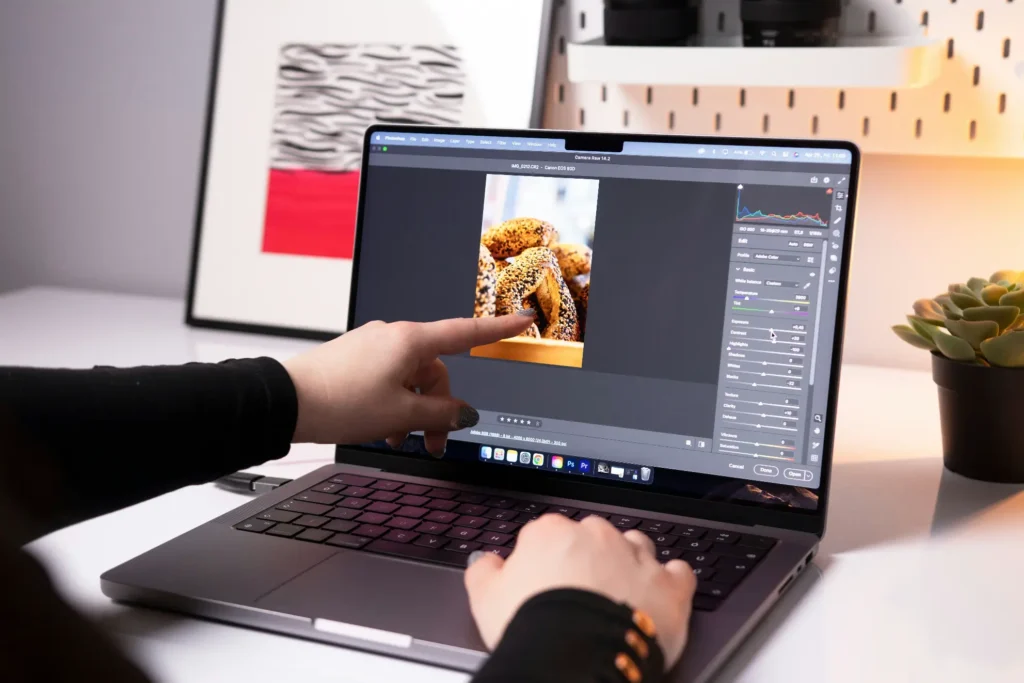
“24 hour turnaround” appears on almost every editing provider’s homepage, so it rarely helps anyone choose between them. What matters is what that number measures, what it leaves out, and how much of your launch schedule depends on it. Photo editing turnaround time is not a single promise. It is the result of several smaller decisions about when the clock starts, how big the batch is, how complex the edits are, and how many rounds of feedback sit between the first delivery and the final files.
The Clock Question Most Buyers Skip
The most useful question to ask any provider is simple: when does the 24 hours start? One turnaround guide aimed at a related editing niche warns about exactly this, noting that a stated turnaround can be measured from the moment editing begins rather than from the moment you finish uploading. That difference can add hours you did not plan for. As that same guide summarizes it, “Turnaround is a system, not a slogan,” according to this timeline breakdown from Pixel Shouters, a vendor in a neighboring editing field. The principle carries over directly to ecommerce product editing.
What Actually Changes Photo Editing Turnaround Time
Edit complexity. Removing a plain background is quick. Ghost mannequin work, detailed retouching, or masking glass and reflective products takes longer per image, which is why many providers quote different timelines for different service types. Dropicts states its 24 hour turnaround applies to specific editing types, which is the honest way to phrase it.
Batch size. A 10 image order and a 1,000 image order cannot move at the same speed unless the provider has staffed for it. Dropicts says it will try its best to hold its 24 hour turnaround regardless of how many images you submit, and the practical test of that claim is a trial run before you depend on it.
File quality and organization. Poorly named files, mixed resolutions, and unclear instructions slow editors down. This is where a clear brief pays off directly, as covered in our guide on writing an editing brief that gets it right the first time.
Time zones. Many outsourced providers work across time zones, so an upload at the end of your day can come back by the start of the next. Whether that applies to a given provider is worth confirming, along with what happens to uploads sent on weekends or local holidays.
Revision rounds. The first delivery is often not the last. Each round of feedback adds its own turnaround on top of the original, so a one day job with two correction cycles is realistically a three day job.
What the Industry Range Looks Like
Published figures vary widely and mostly come from the providers themselves, so treat them as directional. Many vendors advertise something in the range of 12 to 24 hours for standard work, with some stretching to 48 or 72 hours for complex or high volume projects. The spread itself is the useful finding: a single number on a homepage tells you very little without the conditions attached.
Planning a Launch Around Turnaround
Work backward from your publish date. Subtract the stated turnaround, then subtract a buffer for revisions, then subtract time for your own review. The result is the latest date you can send images.
Separate hero images from the rest. Your most important products deserve the earliest slots and the most careful review. Routine catalog items can follow.
Decide in advance what is reshot versus fixed. Time spent waiting on an edit that cannot be fixed is wasted. Our guide on deciding between a reshoot and an edit helps you make that call before images go out.
Plan for peaks. Turnaround that holds on a quiet Tuesday can stretch during a holiday rush if capacity is shared. Our guide on managing product images during peak season covers how to protect your schedule when volume spikes.
Questions to Ask Before You Commit
When does the turnaround clock start and stop? Upload complete to delivery sent is the clearest definition.
Does the timeline change by service type or batch size? Ask for the numbers, not a general reassurance.
How are revisions timed? Confirm whether corrections run on the same turnaround or a faster one.
What happens if a deadline is missed? A provider confident in its timelines can answer this directly.
Can I test it? A small trial order submitted under normal conditions shows real turnaround better than any promise. Our guide on how to choose a photo editing service outlines how to structure that test.
Frequently Asked Questions (FAQ) about Photo Editing Turnaround Time:
What is a normal photo editing turnaround time for ecommerce images?
Published vendor figures commonly fall between 12 and 48 hours for standard product editing, with longer timelines for complex retouching or very large batches. Because these figures come from providers themselves, confirming the conditions behind them matters more than the headline number.
Does a 24 hour turnaround include revisions?
Usually not. The stated turnaround normally covers the first delivery. Each correction round adds its own time, so it helps to ask how revisions are timed and to build that into your schedule.
Why does turnaround time vary by editing type?
Different edits take different amounts of effort per image. Background removal is fast, while ghost mannequin work, detailed retouching, and masking reflective products take more time, so timelines often differ by service.
How can I check a provider’s real turnaround before relying on it?
Submit a small trial batch under normal conditions and measure the time from upload to delivery yourself. This shows actual performance, including any gaps between the promised timeline and the real one.