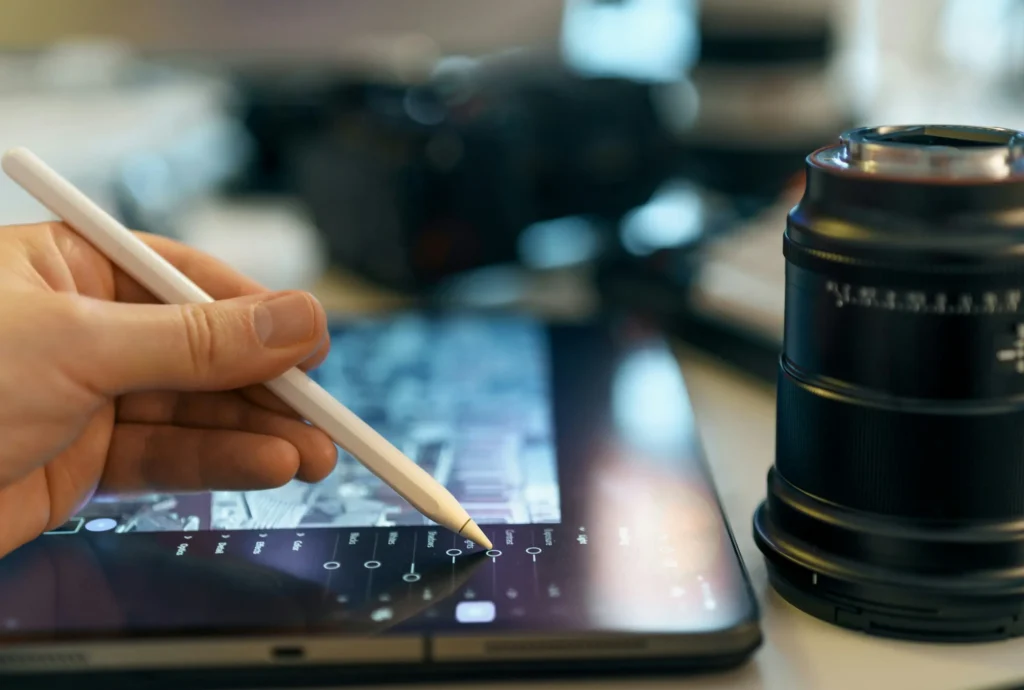
Editing your own product photos feels free. The software may already be on your computer, and the only expense seems to be an evening here and there. The DIY photo editing vs professional service question looks different once you count the hours. For a catalog of a few dozen images, doing it yourself is often the right call. As the catalog grows, the hidden cost is rarely the software. It is your time, and the consistency that suffers when that time runs short.
How Long DIY Editing Actually Takes
Per image time depends heavily on the product. One survey run by a photo editing vendor asked 130 people how long they spend on a single product photo. About 24 percent said under 5 minutes, roughly 18 percent said 6 to 10 minutes, and around 15 percent said 21 to 30 minutes, according to this summary of the responses. One photographer quoted in the same piece sets a goal of “under 30 minutes per image” for a first round of edits. These are vendor collected, self reported figures, so treat them as directional, not as a benchmark.
Another vendor guide suggests a rough scale: a simple flat lay of apparel at 3 to 7 minutes, a mid complexity three dimensional product at 10 to 20 minutes, and jewelry or glass at 30 to 90 minutes. The exact numbers vary by source, but the pattern is consistent. Difficult materials multiply the time, and DIY editors usually meet them with the least experience.
Run the Numbers for Your Own Catalog
Use a simple formula with your own figures:
Minutes per image, times images per month, divided by 60, times the value of your hour.
Here is an illustration with made up numbers, not Dropicts prices. If you spend 8 minutes per image, edit 150 images a month, and value your time at 20 per hour, that is 20 hours and 400 in time cost each month, before counting software or revisions. Replace each number with your own, then compare the total with a real quote for your product types. Our guide on getting a photo editing quote explains how to request one that reflects your actual files.
What the Formula Misses
Consistency. Editing 20 images on a calm weekend gives you a steady look. Editing 200 over several tired evenings can introduce drift in color, edge quality, and retouching intensity, the same problem described in our guide on color consistency across a multi day shoot.
Skill ceiling. Glass, jewelry, and reflective products demand masking judgment that takes years to build, as covered in our guide on why reflective products break normal masking. A DIY editor on a hard image often spends the most time for the weakest result.
Opportunity cost. Hours spent editing are hours not spent on sourcing, marketing, or customer service, which usually pay back more than saving a few minutes of editing.
Deadline risk. A product launch rarely waits for your evening schedule. Having capacity beyond your own hours matters most when timing is tight.
Where DIY Is the Smart Choice
Small catalogs. If you add only a handful of products a month, the time cost is small and you keep full control.
Learning your own standard. Editing a first batch yourself teaches you what good looks like, which makes your later instructions to any provider sharper, as explained in our guide on writing a photo editing brief.
Quick fixes and one off tweaks. A crop, a small correction, or a last minute change is often faster to do yourself than to send out.
Simple products. Plain items on clean backgrounds respond well to basic tools, including AI assisted ones. Our guide on AI image editing compared with human editing covers where those tools fit.
When a Professional Service Starts to Make Sense
Volume that eats your week. When editing takes a regular chunk of your time, the formula above usually points toward outsourcing.
Hard materials. Glass, reflective surfaces, fine detail, and ghost mannequin work benefit most from a specialist.
Consistency across a growing catalog. A defined process helps keep the look steady across hundreds of images. Our guide on high volume image editing for ecommerce covers what to expect as volume rises.
Tight launch timelines. Dropicts states a 24 hour turnaround for specific editing types, which can protect a deadline your own schedule cannot.
The Hybrid Most Sellers End Up With
The DIY photo editing vs professional service question rarely has a single winner across a whole catalog.
You do not have to choose one side. Many sellers edit simple items and quick fixes themselves and send the difficult or high volume work to a service. That keeps control where it matters and frees time where it does not. If you also have an in house team to consider, our guide on outsourcing vs in house image editing covers that comparison.
Test the Math With Real Files
Send one image from your hardest product type and time how long you would have spent on it. Dropicts states that its Pay as You Go service includes a free first image and no signed contract, so you can compare the result and the turnaround against your own editing. You can start through its quote page.
Frequently Asked Questions about DIY Photo Editing vs Professional Service:
Is DIY photo editing cheaper than hiring a professional service?
For small catalogs, usually yes, since your time cost is low. As volume grows, the hours add up and the total can exceed the cost of outsourcing, especially when you count consistency problems and revisions.
How do I know when it is time to stop editing my own photos?
When editing takes a regular share of your week, when difficult products keep producing weak results, or when launch deadlines depend on hours you do not have, it is worth getting a quote and comparing.
Can AI tools replace a professional service for product photos?
For simple products, AI assisted tools can handle basic cleanup well. Glass, jewelry, and reflective surfaces still tend to need manual judgment, so many sellers blend both approaches.
What is the easiest way to compare DIY editing with a professional service?
Time yourself editing one image from your hardest product type, calculate the monthly cost with the formula above, and compare it against a real quote and a free first image from a provider.